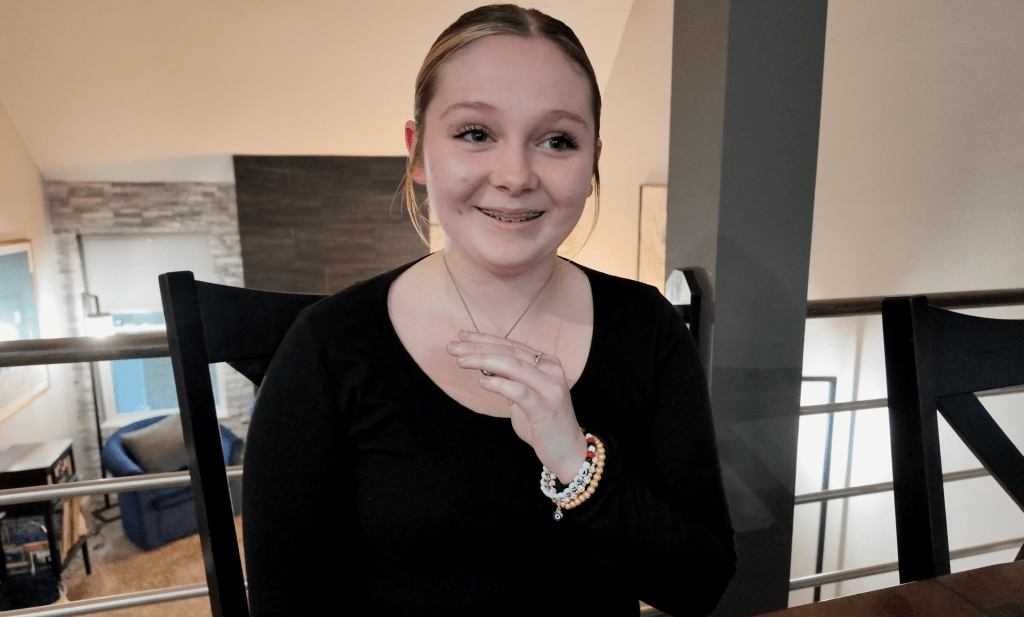
Rowan, a 14-year-old Missouri foster child, had nothing to say to the new stranger standing in the doorway.
The teenager was just three months removed from the day in April 2023 that Child Protective Services had taken her from her mother. After years of being bullied, and enduring a cascade of caseworkers, counselors and suicide interventionists, “I’d adapted to not talking to anybody,” she said.
“I was in my own little bubble. My own shadow.”
The man in the doorway was from LINC. It was Michael Coram, part of LINC’s team of youth advocates serving Missouri’s Chafee Older Youth Program that helps youths age 14 to 23 in the state’s foster care system gain independence so they can thrive as adults.
There was so much Coram wanted to know that day about Rowan and the hardships that brought him to her door. There was so much he had to share about the many ways LINC and the Chafee program could help her.
But in that moment, seeing a silent teen with downcast eyes, the first conversation was simple:
You need anything?
With a little prodding, she finally told him she had been thinking about joining the school tennis team. Maybe he could get her some shoes?
“When we first met,” Coram said, “she would hardly talk or say anything at all.”
The shoe mission, though, shot a glimmer of light into the darkness.
In time, Rowan would talk about growing up with her mother in Ozark, Mo., and other towns between Springfield and Branson — how she loved her mother and that her mother cared about her, but how hard it was. Mental health problems tormented her mother. They lived at times in shelters. As Rowan approached her teen years, they clashed. Depression set in.
“I had all this pent-up stuff I needed to get out,” Rowan said.
Now 16, she remembers well the moment she began feeling some confidence to open up, during that shoe trip to Independence Center shopping mall, as Coram was helping her pick out a pair.
They were Nikes, Rowan recalled. Beautiful. More than she had ever paid or thought she should pay. She even demurred, saying she could find some cheaper.
She was getting these, Coram said. “You’re worth it.”
The Chafee Program — named for Missouri state Sen. John Chafee, who championed the legislation that created the foster youth support program in 1999 — aims to provide youths in the foster care system many of the same supports and comforts that other youths get from their families as they grow into adulthood.
Learn more about: LINC’s programs for teens and young adults
LINC’s youth advocates spend time with the foster teens and young adults, learning their needs, helping them imagine what’s possible. They help them feel good about themselves, get supplies they need for school and help with their education and job training. They provide life-coaching and financial help for transportation, stable housing and good nutrition — all so that they can grow into confident, thriving adults.
But most of all, it’s deeply personal work.
Coram knows that by helping Rowan get a prom dress, he was helping a teen who had been bullied in her last several years of school, often over what clothes she had to wear.
He knows that the MacBook LINC provided for her school work is helping a student who used to like school, but whose grades had fallen to the point she barely passed her freshman year.
He sees a teenager that passed her driver’s test (with help from LINC-funded driving lessons), who earned financial incentives for improving her grades (all A’s and one B in her junior year), and who opened a savings account. He sees someone with a wellspring of hope that had run so dry she tried to overdose on pills.
He shared with Rowan some of the experiences and hardships in his own family and encouraged her that “it can turn around so quick,” he said. “You’re going to get your life together. Things can get better.”
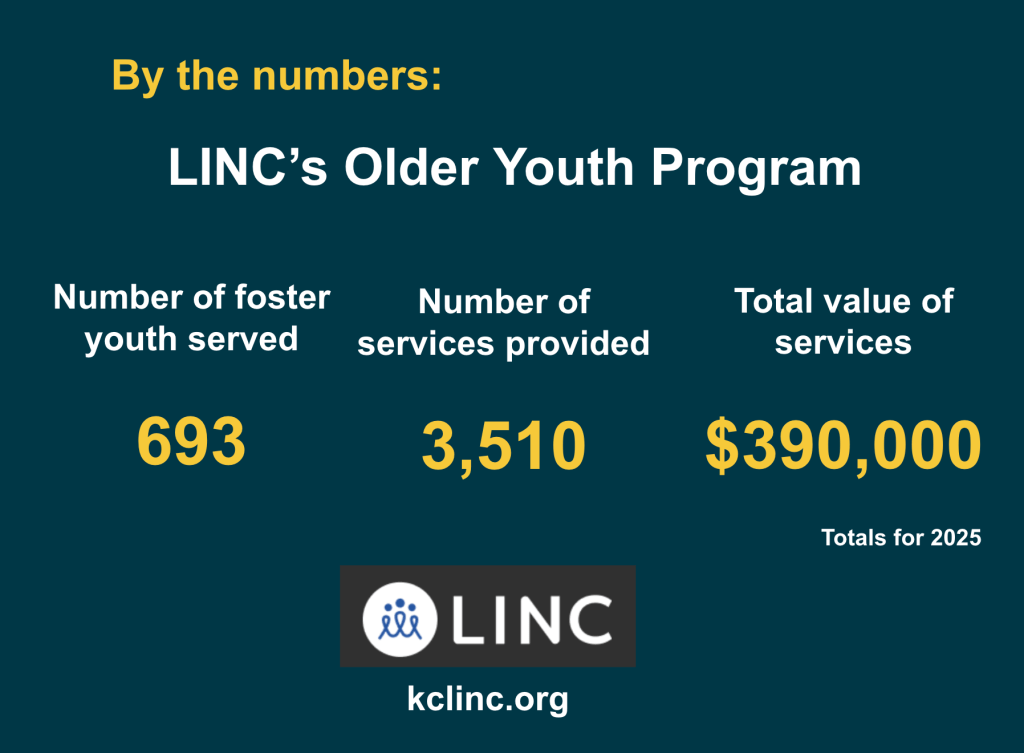
In 2025, LINC’s youth advocate team supported 693 youths in Missouri’s foster system with more than 3,500 services and benefits. The youth earned more than 1,500 incentives, totaling over $390,000 in support and recognition of their work toward independence.
LINC provided 27 life skills classes in the year, adding to the individual work of LINC’s advocates.
Coram, though he is now the director of LINC’s Chafee Program, still keeps Rowan as one of the youths he serves as an advocate. Rowan said she has met enough of the other LINC advocates to know that they all feel a responsibility, and a bond, to the teens like her in their care.
Rowan’s grandparents in Lee’s Summit offered to be her foster parents when the state made the decision to take Rowan into its care in 2023, and the state determined that would be the best placement for her. They have provided a good home for her, Rowan said. She is thankful for their love and their care, and she is thankful for all that Coram and LINC have done for her and her grandparents.
“I’m learning how to connect with people,” she said. “My confidence has definitely grown a lot. I needed to find myself, find my voice, and be able to just escape from where I was.”
Now she’s thinking about what might be next for her.
Cosmetology? Nursing? Hair stylist? She’s thinking of all of these things, she says, “or working with children? Or a therapist, maybe?”
She has a smile on her face. She knows she has advocates who will help her get there.